


Welcome back to Asia Tech Review, your curated digest to keep up to date with tech news across Asia.
TikTok Shop has been quietly catching Southeast Asia’s e-commerce giants in the past few years, and now it has fired a clear shot at them with the launch of a standalone app for its shopping business. TikTok Shop has already topped the download charts in some markets, but can it topple Shopee?
To keep up with our issues, follow us on LinkedIn or WhatsApp. Please do share Asia Tech Review with people you know who want to get smart about Asia tech.
For news as it happens, follow ATR Bulletin, our real-time news site that keeps you in the know.
TikTok’s Shop tab now has a dedicated app
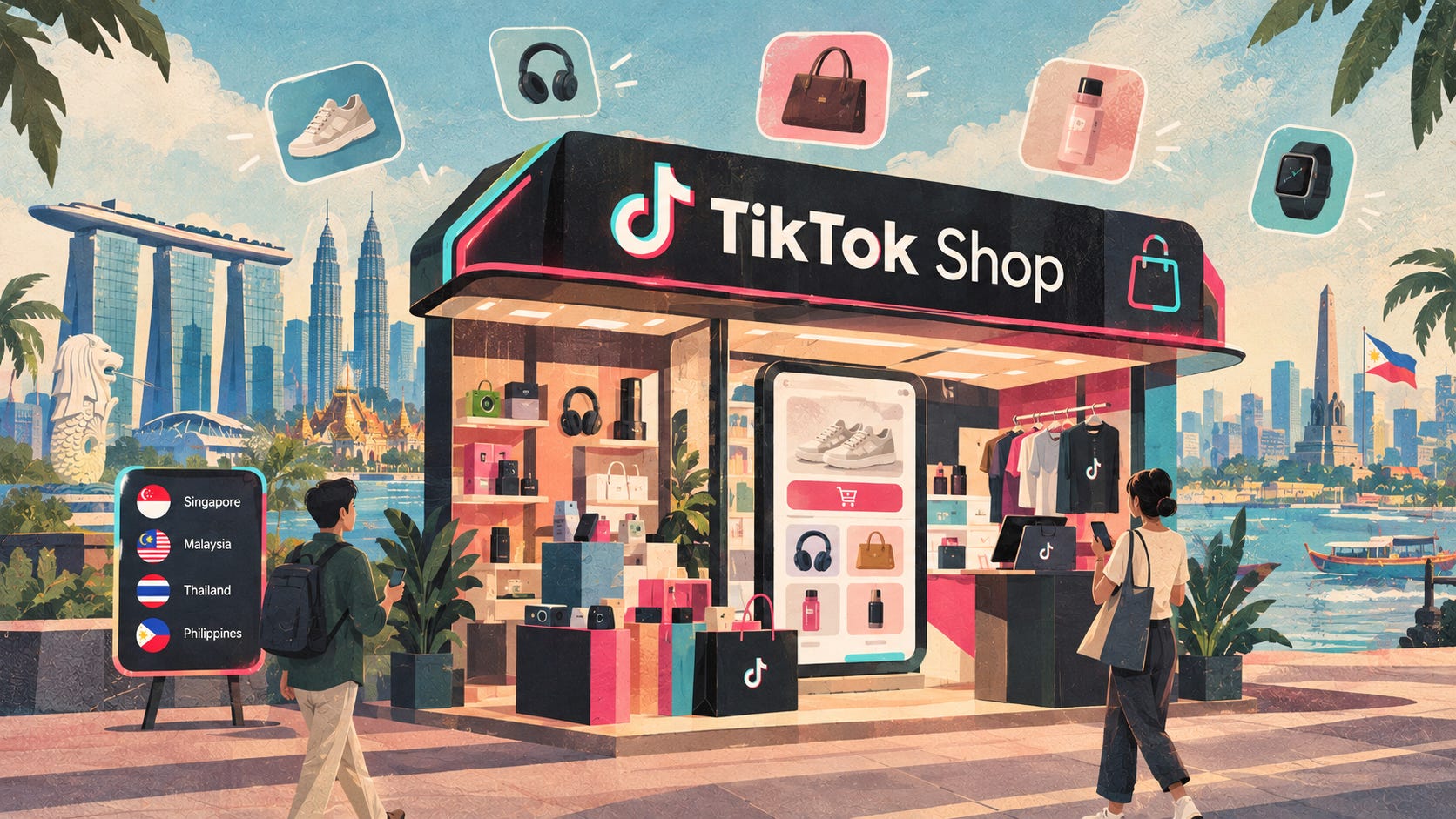
TikTok Shop has been quietly catching up with Southeast Asia’s e-commerce leaders, and its mission became clearer after it got its own app in the region.
A standalone TikTok Shop app launched for iOS and Android in Singapore, Malaysia, Thailand, and the Philippines last week, giving its users (shoppers) a direct channel to buy goods. There was no fanfare from TikTok which suggests this is a limited test that could be rolled out in more countries and regions worldwide.
Right now, TikTok users can shop inside the short video app through a dedicated tab or when creators they follow or videos that appear in their feed include products that are for sale. That means they can either discover items serendipitously or seek out products proactively. TikTok’s randomness is a strength when it helps shoppers discover products they didn’t know they wanted, but a weakness when they’re looking for something specific. The standalone TikTok Shop app might change that by giving shoppers a dedicated place to browse.
Having the brand deals and sheer inventory to launch a dedicated app shows just how much progress TikTok Shop has made.
The business is estimated to have reached $54.6 billion in GMV across Southeast Asia last year, up more than 50% year-on-year, according to Momentum Works. That puts it behind Shopee’s $83.2 billion GMV, but that gap is sure to narrow this year. Already, in Thailand, reports suggest it might have overtaken Shopee.
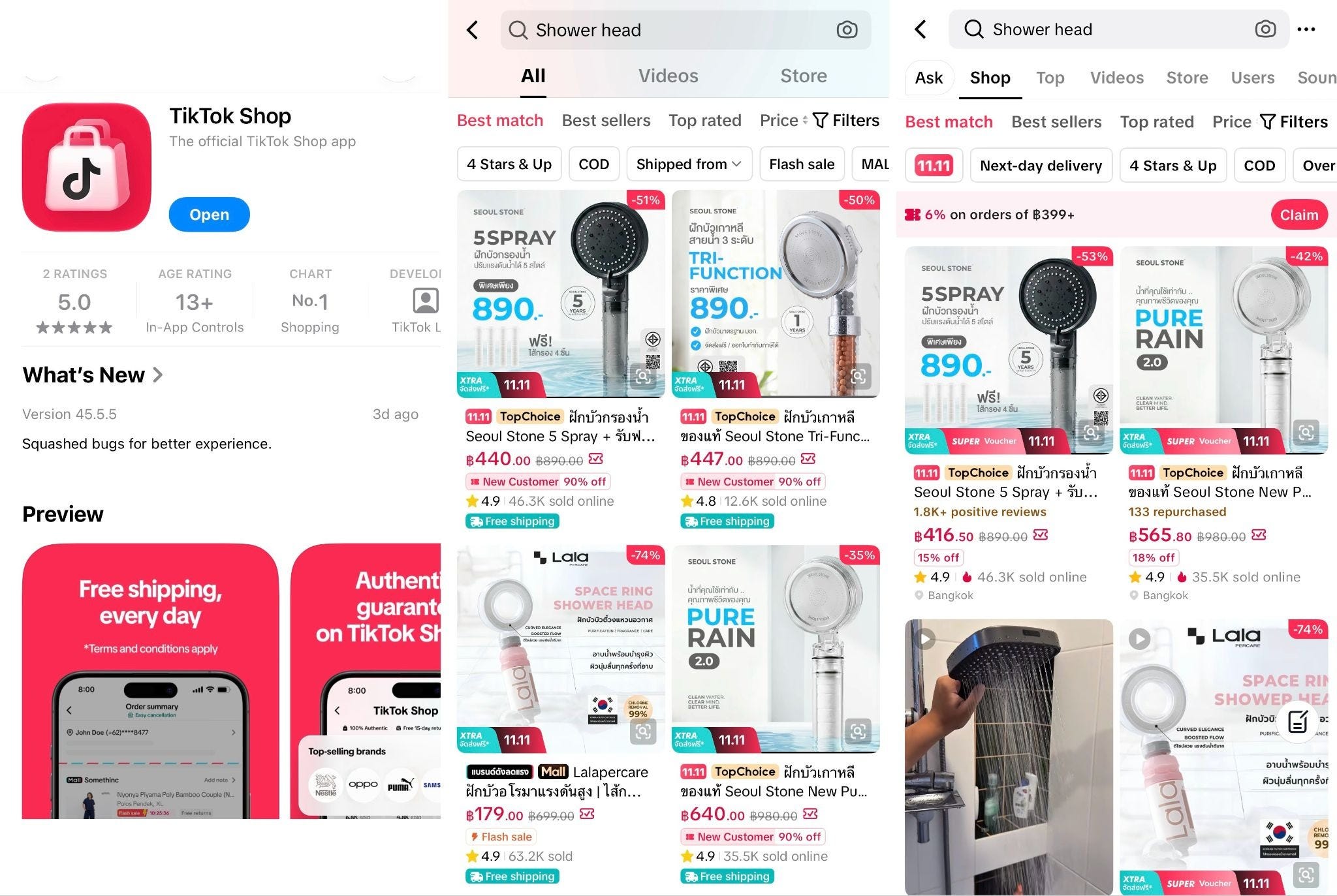
TikTok Shop is already the top iOS app for shopping in Thailand, but can you tell which screenshot is from TikTok and which is from TikTok Shop?
There’s no guarantee this launch will move the needle, though.
The new app is nearly identical to the ‘shop’ tab inside TikTok, and the Shop app has a tab for videos. So this is basically the reverse app. TikTok may choose to push discounts and deals via the dedicated app to build a more engaged channel for its e-commerce business. Or it may find that promoting another app in these markets isn’t so easy given how few apps people download these days.
Either way, it’s a clear sign that TikTok is serious about e-commerce and that Southeast Asia is the primary market it is focused on.
Nvidia’s spy affair mess is about to get messier
Nvidia’s board has opened an investigation into reports that CEO Jensen Huang was targeted by a foreign intelligence effort, after he disclosed a relationship with a Singapore-based tech executive suspected by US officials of spying for China.
Word of Huang’s relationship with Alice Huang, a former executive of Singapore-based Megaspeed and an alleged Chinese intelligence agent, spilled out in recent weeks. The Nvidia CEO has now confirmed he had an affair with Huang (no relation, of course) but the relationship raises several questions, including what information he shared with her, and who is leaking the information.
More notable is that Megaspeed appears to be funded by Alibaba as a report from short seller Culper Research claimed back in May:
Nvidia has repeatedly vouched for Megaspeed – its single largest Southeast Asian chip buyer currently under investigation by both U.S. Commerce and Singapore authorities – as “wholly owned and operated by a company based and headquartered outside China, with no China shareholders.” Nvidia has also claimed that it has “repeatedly tested and sampled data centers around the world and found no diversion.” Documents we uncovered, however, suggest that Megaspeed has been secretly financed by Alibaba via a series of apparent shell companies. Tellingly, Nvidia’s lawyered phrasing – that Megaspeed holds no Chinese equity – doesn’t seem to preclude Chinese financing.
The full report is well worth reading, but these links to Alibaba could add serious dynamite to this situation, which is already uncomfortable enough for Nvidia and Huang.
What will the investigation uncover and will its findings be public?

Deals
Chinese AI video startup Sand.ai raised $200 million in a Series A extension at a valuation above $1 billion [DealStreetAsia]
SoftBank and ABB are exploring a carve-out of ABB’s Chinese robotics business to rescue the planned acquisition of the division after Beijing blocked the deal [Bloomberg]
AI and Chips
Nvidia is requiring its cloud partners in Southeast Asia to join a system that tracks the location of their AI chips, as it seeks to prevent smuggling into China [Bloomberg]
China’s YMTC plans to source up to 70% of the equipment for its fourth Wuhan factory from domestic suppliers, up from just over half at its third plant [Reuters]
Chinese AI models accounted for 89% of enterprise spending on open-source systems in a Menlo Ventures study, with Moonshot AI’s Kimi taking 61% [SCMP]
TSMC is considering making advanced 3D DRAM memory chips at the request of its biggest customer, Nvidia [The Information]
ByteDance is seeking a developer for the second phase of its data centre project in Ceará, northeastern Brazil [Bloomberg]
Security researchers found hundreds of publicly accessible copies of Artex, a Chinese open-source AI hacking tool that Microsoft says can carry out attacks with minimal human involvement [TechCrunch]
New Matrix, a Chinese firm approved to assemble Nvidia H200 chips, faces scrutiny after an investigation found little evidence of activity at its registered address and linked its owners to a US-blacklisted fund [NYT]
Envision Group’s 800MW Galaxy campus in Inner Mongolia combines wind power and battery storage with infrastructure for AI data centres, including a direct-current pilot and a chiller-free cooling system [SemiAnalysis]
DeepSeek’s open-source AI agent application Harness reached 1.54 million daily active users by 4 November, up from about 271,000 at the end of September [Bloomberg]
Policy
Southeast Asia is in a period of reckoning for data centres after Thailand paused construction on 49 data projects and delayed decisions on 117 others in September, while Indonesia’s West Java province halted a project over permits and environmental assessment [The Guardian] [Disclosure: BDx Data Centers is an Ellerton & Co. client]
The European Commission has preliminarily found TikTok in breach of the Digital Services Act over its recommendation system, which it says can lead users into harmful content loops [The Record]
The US Treasury imposed another round of sanctions on Cambodia’s Prince Group, targeting four individuals and 41 entities over their alleged involvement in online scams [Nikkei Asia]
Shenzhen is stepping up a crackdown on markets selling smuggled chips, stolen iPhones and other illicit goods ahead of the APEC summit [FT]
In other news:
India’s IT graduates face a tougher job market as companies use AI to automate entry-level coding and testing, industry body NASSCOM’s president told Nikkei Asia [Nikkei Asia]
Apple cut its tax bill by $2.7 billion in 2026 by attributing up to $50 billion in profits to Singapore and using the city-state’s tax incentives, US disclosures show [FT]
Singapore ride-hailing firm Tada will join a self-driving minibus pilot on Sentosa early next year, using two 10-seat vehicles from China’s WeRide that passengers can book through its app [Nikkei Asia]
Sony is expanding its anime business as it seeks to capitalise on the genre’s growing international popularity [NYT]